
Starting a custom apparel business can be attractive to entrepreneurs because customers can order personalized T-shirts, hoodies, uniforms, bags, sportswear, and promotional products in small quantities.
A DTF printer is one of the most flexible technologies for this type of business. DTF, or Direct to Film printing, creates a full-color transfer on PET film instead of printing directly onto the garment. The transfer is then bonded to fabric with a heat press.
For new businesses, the biggest challenge is not simply buying a printer. You need to choose the right production size, understand consumable costs, build a reliable workflow, and identify customers before investing in equipment.
This guide explains what you need to know before starting a DTF printing business.
A DTF printer is a specialized printer that produces textile transfers on PET film.
The typical DTF process is:
Design → RIP software → DTF printing → Powder application → Powder curing → Heat pressing → Finished garment
Unlike traditional screen printing, DTF does not require a separate screen for each color. This makes it practical for detailed artwork, gradients, photographs, logos, and short-run orders.
DTF printing is commonly used for:
The ability to produce individual designs without traditional screen setup is one of the reasons DTF has become popular with small print businesses.
A new business does not necessarily need to wait for large orders.
DTF transfers can be produced for one garment, ten shirts, or a larger batch. This makes the technology suitable for personalized products and small businesses testing new designs.
DTF transfers can be used on many common textile materials, including cotton, polyester and blended fabrics.
This gives a new business more opportunities to sell products instead of focusing on only one type of garment.
DTF technology can reproduce colorful artwork, photographs, gradients, logos and complex illustrations.
This is particularly useful for custom apparel businesses where customers often request unique designs rather than simple one-color graphics.
A traditional screen-printing setup can become inefficient when customers request many different designs in small quantities.
DTF is more flexible because the same printer can produce different designs without changing physical screens.
A business can start with a smaller DTF printer and upgrade as order volume increases.
Common business stages include:
Home business → Small print shop → B2B transfer supplier → Commercial production
The important point is to match machine capacity with actual demand rather than buying the largest printer available on day one.
A complete DTF production workflow normally includes several components.
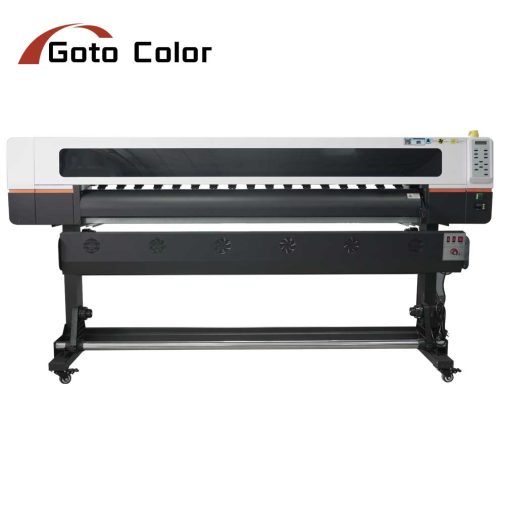
The printer is the core of the system.
When comparing DTF printers, look beyond the advertised printing speed. Consider:
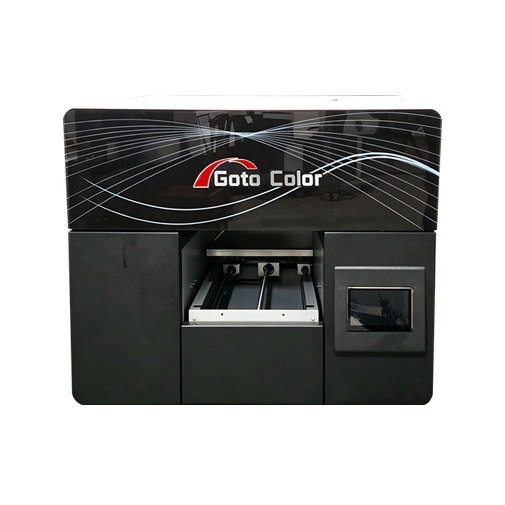
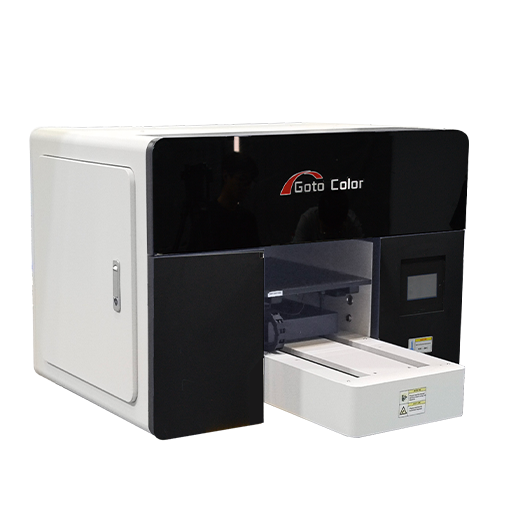
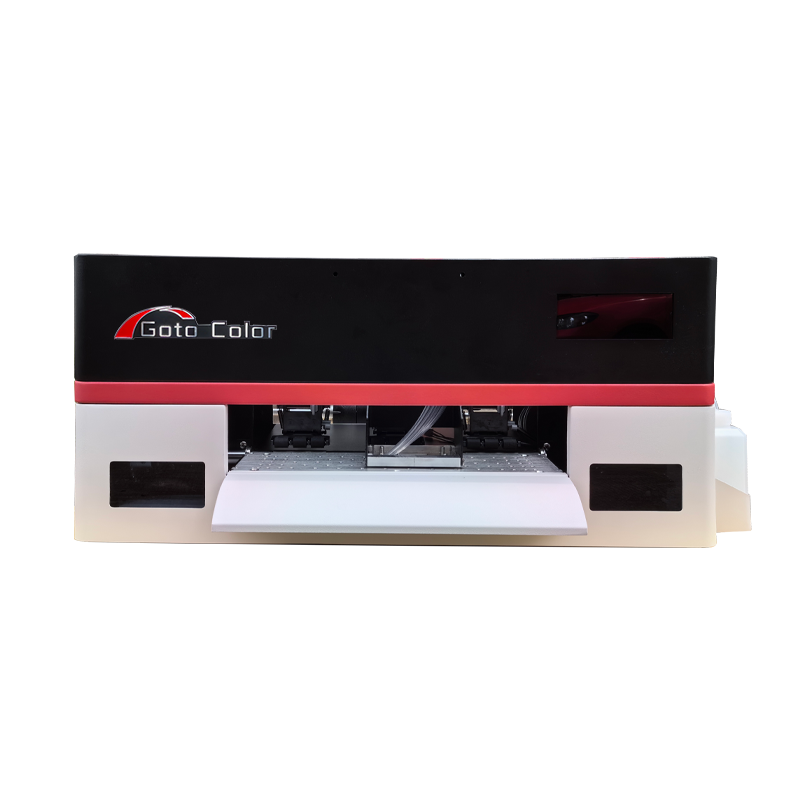
For beginners, an A3 or similar desktop DTF printer can be suitable for low-volume production.
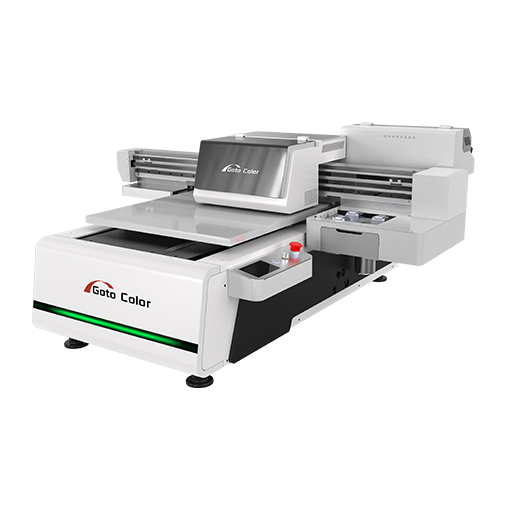
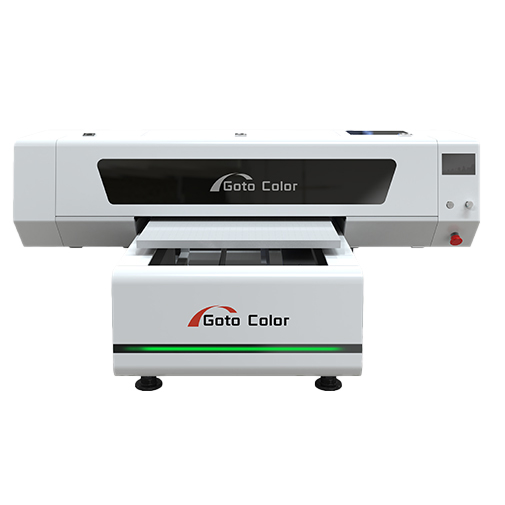
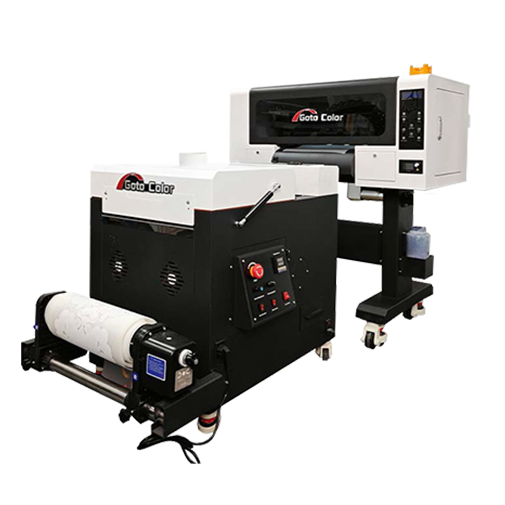
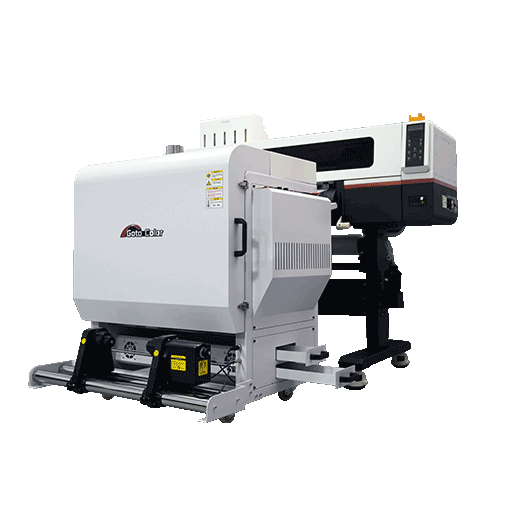
For businesses expecting larger orders, a 24-inch/60 cm DTF printer provides substantially more production capacity and is better suited to continuous transfer production.
DTF film is the surface on which the design is printed.
Film can be supplied as sheets or rolls. Roll film is generally more convenient for businesses producing transfers continuously.
Important factors include:
Cheap film can create problems such as poor ink adhesion, uneven powder bonding, difficult peeling, or inconsistent transfer quality.
Most DTF systems use CMYK plus white textile pigment ink.
White ink is particularly important because it creates the foundation for the color layer and allows colorful designs to be transferred onto dark garments.
White ink also requires careful maintenance because pigment particles can settle when the printer is not used properly.
After printing, hot melt adhesive powder is applied to the wet ink.
The powder creates the adhesive layer that bonds the printed design to the fabric during heat pressing.
Powder quality affects:
For very small operations, powder can sometimes be applied manually.
However, a powder shaker and curing unit becomes increasingly valuable as production volume increases.
An automatic system can provide more consistent powder application and curing while reducing manual labor.
The heat press transfers the finished DTF design onto the garment.
When choosing a heat press, pay attention to:
A larger, reliable heat press can become important when processing dozens or hundreds of garments per day.
Understanding the complete workflow helps new business owners avoid common production problems.
Create or receive the customer’s artwork.
The design should have the correct dimensions and sufficient resolution for the intended transfer size.
Transparent backgrounds are commonly used for apparel graphics.
RIP software controls how the artwork is converted into printable data.
Depending on the system, the software can control:
Correct RIP settings are important for achieving consistent color and reducing unnecessary ink consumption.
The printer applies the CMYK colors and white ink to the coated PET film.
The design is normally printed in mirror orientation so that it appears correctly after transfer.
Powder is applied to the printed surface while the ink is still wet.
Excess powder should be removed before curing.
The coated film is heated so that the adhesive powder melts and forms a uniform adhesive layer.
The exact curing temperature and time depend on the powder, film and equipment manufacturer’s specifications.
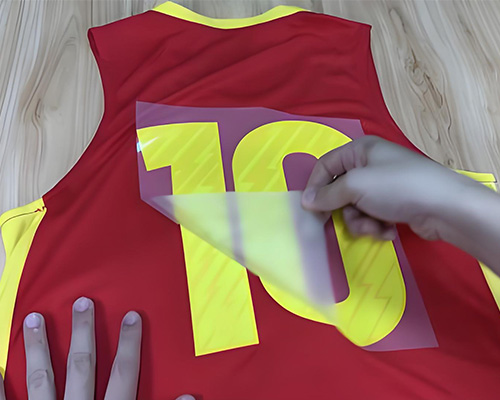
The cured transfer is positioned on the garment and pressed according to the recommended temperature, pressure and time.
These settings should be tested rather than copied blindly because different films, powders and fabrics can behave differently.
Depending on the film, the transfer may use a hot-peel, warm-peel or cold-peel process.
After peeling, a final pressing step may be used when recommended by the consumable manufacturer.
There is no single startup cost because a DTF business can operate at very different production levels.
Current industry guides commonly place small-business DTF setups somewhere from several thousand dollars to well above $10,000, depending on printer size, curing equipment, heat press, software and initial supplies.
A practical way to plan the investment is to divide the business into three levels.
| Business Level | Typical Setup |
|---|---|
| Entry | Small DTF printer + heat press + basic curing solution |
| Small Business | Larger DTF printer + powder shaker/dryer + production heat press |
| Commercial | 60 cm or larger production printer + automated powder curing + higher-capacity heat press |
Do not calculate the budget from the printer price alone.
Your initial investment may also include:
There is no universal “best” DTF printer.
The best machine depends on your expected order volume.
If you are testing the market or producing a small number of orders, a compact DTF printer can reduce the initial investment.
Focus on:
If you already have customers and expect regular orders, a larger printer can provide better productivity.
A wider printer also allows you to produce multiple transfers efficiently on a roll.
Businesses serving clothing brands, print shops, distributors and other decorators should consider production-oriented equipment.
A 60 cm DTF printer with a powder shaker and dryer is a common direction for businesses that need continuous transfer production.
The key is to purchase based on expected workload, not simply the lowest purchase price.
Before buying a machine, compare these factors.
Print width determines how efficiently you can produce transfers.
A3 machines are convenient for small orders, while 60 cm machines are better suited to continuous production.
Printhead technology affects speed, resolution, maintenance and operating cost.
Ask the supplier which printhead is used, whether replacements are readily available, and how frequently maintenance is required.
White ink management is one of the most important considerations when buying a DTF printer.
Look for features such as:
Do not evaluate speed based only on the manufacturer’s maximum specification.
Ask for production speed at the print mode and resolution you will actually use.
A printer can become the center of your business operation.
Before purchasing, ask:
For a new business, after-sales support can be just as important as the printer itself.
A DTF business does not have to depend entirely on T-shirts.
You can build different product categories around the same production technology.
T-shirts are usually one of the easiest products for a new DTF business to sell.
Possible customers include individuals, families, clubs, schools and local businesses.
Larger garments can support higher selling prices and are particularly suitable for seasonal campaigns and fashion brands.
Custom team names, numbers and logos create opportunities with sports clubs, schools and recreational teams.
Restaurants, construction companies, cleaning companies, tradespeople and other businesses may require branded uniforms.
Custom tote bags can be sold as promotional products, event merchandise or fashion accessories.
This is one of the most interesting B2B opportunities.
Instead of selling finished T-shirts, you can sell ready-to-press DTF transfers to:
This model can allow one printer to serve many customers rather than relying only on individual garment orders.
Buying a DTF printer does not automatically create demand.
Customer acquisition should begin before the machine arrives.
Instead of advertising “custom printing for everyone,” choose a clear target market.
Examples include:
A specific niche makes it easier to create relevant samples and advertising.
For a local DTF business, consider:
Show actual products rather than only pictures of the printer.
Customers generally care more about the finished shirt, transfer quality, turnaround time and price than the technical specifications of the machine.
Create 10–20 strong samples for your target niche.
For example, if you want to sell to restaurants, create samples featuring:
Samples make it easier for potential customers to understand what you can produce.
Avoid setting your price based only on the cost of blank garments and ink.
Your real cost includes:
Blank garment + ink + film + powder + electricity + labor + maintenance + packaging + payment fees + advertising + shipping + machine depreciation
For example, if a shirt costs $5 and the transfer materials cost $2, selling it for $8 does not necessarily mean you make $1.
You still need to account for labor, failed prints, packaging, equipment and other operating expenses.
A simple pricing formula is:
Selling Price = Total Product Cost + Labor + Overhead + Desired Profit
For B2B customers, you can create volume-based pricing.
For example:
The exact numbers should be based on your actual costs and local market conditions.
Maintenance should be part of your daily production routine.
White ink is especially important because pigment can settle and cause ink-delivery problems if the printer is not maintained correctly.
A basic maintenance routine may include:
Skipping maintenance can turn a small printing problem into an expensive printhead or ink-system repair.
A powerful printer cannot solve a lack of demand.
Start by identifying your target customer and expected order volume.
The cheapest printer may have higher maintenance requirements, weaker support or limited production capacity.
Compare total ownership cost rather than purchase price alone.
White ink is one of the most important parts of DTF printing. Poor maintenance can lead to clogged nozzles and inconsistent prints.
Low prices may attract customers initially, but they can make it difficult to pay for labor, maintenance and equipment upgrades.
A new business is usually easier to market when it has a specific customer and product focus.
Before selling a new combination of film, powder, ink and garment, test the finished transfer.
Check:
DTF printing can be a viable business model, but profitability depends on factors such as equipment utilization, material costs, pricing, customer acquisition and repeat orders.
Current industry estimates vary widely, which is why generic claims about guaranteed DTF profits should be treated cautiously.
A better question is:
How many profitable orders do I need each month to cover my fixed costs?
For example, calculate:
Monthly Break-Even Orders = Monthly Fixed Costs ÷ Profit per Order
This gives you a much more useful target than simply estimating potential revenue.
Identify your target customers, competitors, product categories and expected selling prices.
Purchase the appropriate DTF printer and supporting equipment. Test different garments, film, powder and print settings.
Create product samples, establish your website or social media pages, publish pricing and begin customer acquisition.
Track:
Use this data to eliminate unprofitable products.
If orders consistently exceed your current production capacity, consider upgrading your printer, adding automation or expanding into B2B DTF transfer production.
A DTF printer creates full-color heat transfers on PET film that can be applied to garments and other suitable textile products using a heat press.
Yes. DTF can be suitable for beginners because it supports full-color designs, small orders and a wide range of apparel products. However, beginners still need to learn printer maintenance, color management, powder curing and heat-press settings.
The price varies significantly depending on printer size, printhead configuration, production speed and included equipment. A complete business setup can range from several thousand dollars to more than $20,000.
A powder shaker is not essential for every small operation, but it becomes increasingly useful as production volume grows. Automated powder application and curing can improve consistency and reduce manual work.
Yes. DTF transfers are widely used for cotton garments as well as polyester and blended fabrics.
Yes, provided your workspace, electrical setup, ventilation, noise level and local business requirements are appropriate. Many new operators begin with smaller equipment and expand after validating demand.
An A3 printer can make sense for low-volume production and market testing. A 60 cm DTF printer is generally more appropriate when you expect continuous production, larger orders or B2B transfer sales.
A DTF printer can give a new business a flexible way to enter custom apparel production without building a traditional screen-printing operation.
The most important decision is not simply which DTF printer is cheapest. It is choosing a machine that matches your customers, production volume and growth plan.
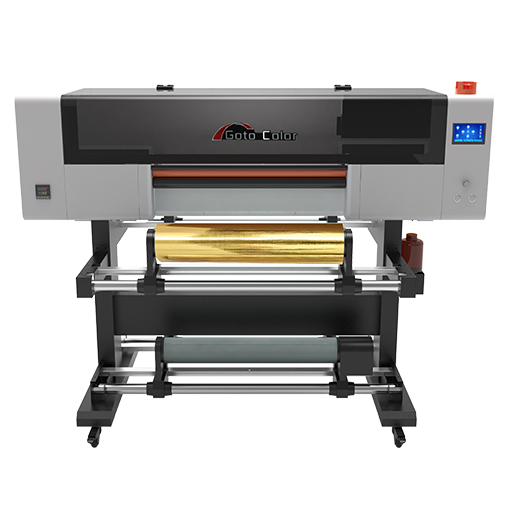
If you are starting small, validate your market first. If you already have regular apparel orders, consider a larger production system. And if your goal is to supply other decorators, a 60 cm roll-to-roll DTF production line can provide a more scalable foundation.
The best DTF business is not necessarily the one with the most expensive equipment. It is the one that combines reliable printing, controlled production costs, consistent transfer quality and repeat customers.